
Can You Get Pet Insurance for an Older Pet?
Older dogs and cats can often still qualify for pet insurance, but age limits, health history, waiting periods, and plan availability can narrow the choices. The right comparison starts with what a new policy can cover from today forward.

Being older does not automatically make a pet uninsurable
A pet’s age matters, but it is only one part of the enrollment decision. Provider rules, state availability, medical history, and the type of plan all shape what is offered.
Some plans have no stated upper age limit
Certain insurers continue accepting new dogs and cats at advanced ages. Others stop new accident-and-illness enrollment after a specified birthday.
Age and health history are different issues
An older pet may qualify for a policy while still having specific past or current medical conditions excluded from reimbursement.
Coverage choices may become narrower
If comprehensive coverage is unavailable, accident-only insurance or a more limited plan may remain an option, depending on the provider.
How pet insurance age limits work
There is no single enrollment age used by every pet insurance company. One provider may accept a senior dog or cat while another may limit new applications at that same age.
Also, “senior” is not a fixed insurance category. A veterinarian may consider a pet senior based on species, breed, size, and health, while an insurer uses its own policy rules for eligibility and pricing.
Check these age details before applying
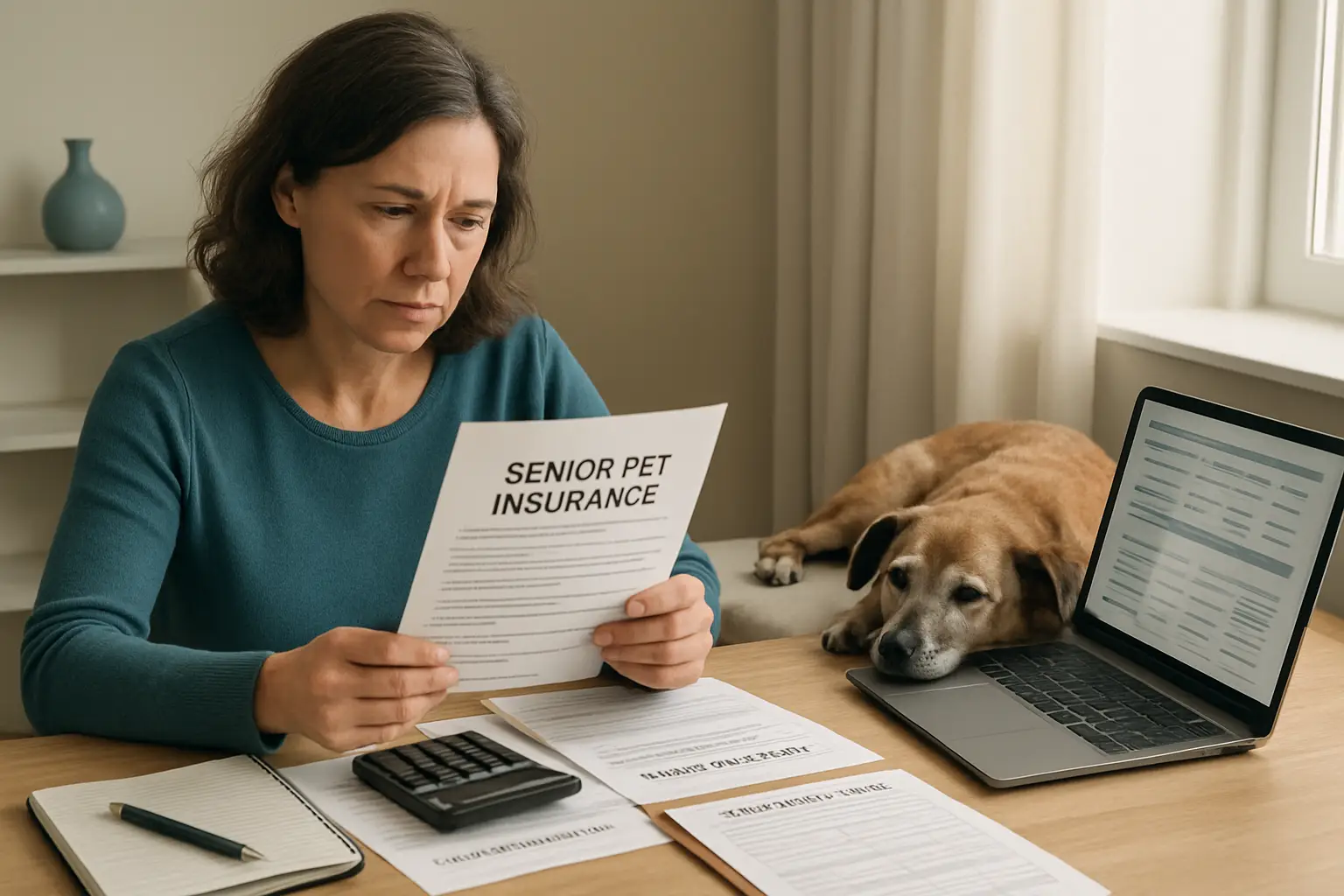
What can pet insurance cover for an older dog or cat?
When an eligible condition begins after the policy starts and after any applicable waiting period, an older pet may receive many of the same covered benefits available to a younger pet.
| Coverage area | What may be included | What to verify |
|---|---|---|
| Accidents | Eligible injuries, urgent treatment, diagnostic testing, surgery, hospitalization, and prescribed medication. | Accident waiting period, exclusions, deductible, reimbursement rate, and annual limit. |
| New illnesses | Eligible illnesses first showing signs after coverage begins and the illness waiting period ends. | Medical-record review, symptom history, hereditary-condition rules, and illness exclusions. |
| Diagnostics | Bloodwork, imaging, specialist consultations, and other covered tests connected to an eligible claim. | Whether exam fees and specialist fees are included or optional. |
| Ongoing treatment | Continued care for an eligible condition that first developed while the policy was active. | Annual versus lifetime limits, renewal terms, and prescription coverage. |
| Routine care | Wellness benefits may help with exams, vaccines, or preventive services when purchased separately. | Whether the wellness option is insurance, a scheduled benefit, or a separate add-on. |
Pre-existing conditions are the biggest limitation
Pet insurance usually focuses on future, unexpected veterinary expenses. A new policy commonly excludes an illness, injury, symptom, or related condition that existed before the effective date or appeared during a waiting period.
A formal diagnosis is not always required. Notes about symptoms, veterinary advice, testing, medication, or earlier treatment may affect how a later claim is classified.
Curable and chronic conditions may be treated differently
Some insurers may reconsider a resolved, curable condition after the pet has remained symptom-free and treatment-free for a stated period. Chronic, recurring, bilateral, or incurable conditions are more likely to remain excluded. Definitions and timelines differ, so confirm the wording before enrollment.
For a deeper explanation, read our guide to pet insurance and pre-existing conditions.
Review your pet’s records first
Ask your veterinarian for a copy of the medical history, then compare it with the policy definition of a pre-existing condition.
Why pet insurance usually costs more for an older pet
Age can increase the likelihood of veterinary claims, so senior-pet premiums are often higher. The final quote also reflects location, breed, coverage design, and provider pricing.
Pet profile
Species, breed, age, sex, and ZIP code can all influence the premium offered for an older pet.
Plan structure
A lower deductible, higher reimbursement percentage, or larger annual limit usually increases the monthly price.
Optional benefits
Exam-fee coverage, rehabilitation, dental illness benefits, or wellness add-ons can change the total cost.
Do not compare premiums by themselves
A cheaper plan may use a higher deductible, a lower reimbursement level, a smaller annual limit, or broader exclusions. Review our pet insurance pricing guidance and deductible guide together so the monthly price is connected to what you may pay during a claim.
How to compare pet insurance for an older pet
Use the same questions for every quote. This keeps a low premium from hiding a major coverage difference.
Confirm age eligibility
Check the upper enrollment age for the exact plan, not only the company’s general eligibility statement.
Map current health issues
List existing diagnoses, symptoms, medications, and prior treatment that could lead to policy exclusions.
Compare the policy mechanics
Review deductibles, reimbursement, annual limits, waiting periods, covered services, and claim procedures.
Check senior-relevant benefits
Look closely at diagnostics, specialist care, prescription medication, rehabilitation, and exam-fee coverage.
Understand renewals
Ask how premiums may change and whether covered conditions remain eligible when the policy renews.
Read a sample policy
Use the policy form and exclusions to verify the sales summary before paying for coverage.
Choosing a path for an older dog or senior cat
The basic insurance principles are similar, but breed risks, available plans, and typical health concerns can make the best comparison path different.
Older dog insurance
Compare orthopedic rules, hereditary-condition coverage, rehabilitation benefits, medication, diagnostic testing, and age eligibility. Start with our guide to the best senior dog insurance considerations.
Senior cat insurance
Review coverage for diagnostics, hospitalization, prescription medication, specialist care, and chronic conditions that begin after enrollment. See our senior cat insurance guide.
When pet insurance may still be worth it
- Your pet is eligible for meaningful accident-and-illness coverage.
- You want protection against new emergencies or illnesses that are not already excluded.
- A large veterinary bill would be difficult to cover from savings alone.
- The premium, deductible, reimbursement rate, and annual limit create a reasonable balance.
- You understand which existing conditions will not be covered.
When another strategy may fit better
- Most expected care relates to conditions excluded by the new policy.
- The premium is difficult to maintain alongside routine veterinary expenses.
- The available annual limit is too low for the protection you want.
- You can comfortably maintain a dedicated veterinary emergency fund.
- A veterinary discount program or payment plan better matches the immediate need.
You can often insure an older pet, but the details decide the value
Age alone does not always prevent a dog or cat from getting pet insurance. The bigger questions are whether the provider accepts new enrollment at your pet’s age, what the medical-history review excludes, and whether the remaining coverage is worth the premium.
Compare the policy structure, not just the provider name. A plan that covers new accidents and illnesses with useful limits may still provide meaningful protection, even when an existing condition is excluded. Begin at the PetInsurances.us home page for broader guidance, then use the site’s comparison and quote tools to narrow the options for your pet.
Questions about pet insurance for older pets
These answers provide general guidance. Eligibility and coverage always depend on the policy offered in your state.
Editorial and source note
This article provides general educational information and is not veterinary, legal, or financial advice. Policy definitions, availability, and pricing vary by company and state.
Our explanation of waiting periods, disclosures, and pre-existing-condition rules was informed by the National Association of Insurance Commissioners’ Pet Insurance Model Law. Always rely on the policy issued to you for the final terms.
Compare coverage for your older pet
Use your pet’s current age, breed, ZIP code, and health history to compare plans on the same basis. Check eligibility first, then review exclusions, deductibles, reimbursement, and annual limits.