
Does Pet Insurance Cover Diagnostic Tests?
Pet insurance can often cover bloodwork, X-rays, ultrasounds, MRI scans, CT scans and other diagnostic tests when a veterinarian orders them for an eligible accident or illness. The reason for the test, when symptoms started and the type of policy you purchased all affect whether the claim is covered.

When Are Veterinary Diagnostic Tests Covered?
Direct answer: A diagnostic test is usually more likely to qualify when a licensed veterinarian recommends it to investigate a covered accident or illness that began after the policy became active and all applicable waiting periods ended.
Testing may not qualify when it is routine, preventive, elective, related to breeding or pregnancy, or connected to symptoms that appeared before enrollment.
The name of the test does not determine coverage by itself. An X-ray, blood panel or MRI can be covered in one situation and excluded in another. Insurers normally review the medical reason for the procedure, your pet's records and the terms of the policy.
| Diagnostic Test | When It May Be Covered | When It May Be Excluded |
|---|---|---|
| Bloodwork | Investigating vomiting, weakness, infection, organ disease or another eligible illness | Routine annual screening or testing related to an excluded condition |
| X-rays | Checking for fractures, swallowed objects, bladder stones or breathing problems | Preventive screening, breeding evaluations or pre-existing symptoms |
| Ultrasound | Examining abdominal pain, organ problems, masses or an eligible heart condition | Pregnancy monitoring or elective screening without a covered medical reason |
| MRI scan | Investigating neurological, spinal, joint or soft-tissue problems | Testing connected to symptoms documented before coverage started |
| CT scan | Detailed imaging for trauma, tumors, internal disease or surgical planning | Screening connected to an excluded procedure or condition |
| Biopsy and pathology | Identifying abnormal tissue, a mass, cancer or another eligible disease | Testing related to a condition the policy does not cover |
Does Pet Insurance Cover Bloodwork and X-Rays?
Bloodwork is often eligible when it helps a veterinarian diagnose or monitor a covered medical problem. This can include a complete blood count, blood chemistry panel, thyroid test, infection screening or other laboratory work ordered because the pet is showing symptoms.
Routine bloodwork for a healthy pet is different. Standard accident and illness insurance may treat an annual blood panel as preventive care. A separate pet insurance wellness plan may provide an allowance for routine laboratory services.
X-rays may be covered when they are needed after an injury or to investigate a covered illness. Common examples include suspected broken bones, swallowed objects, bladder stones, joint problems, coughing and abdominal pain.
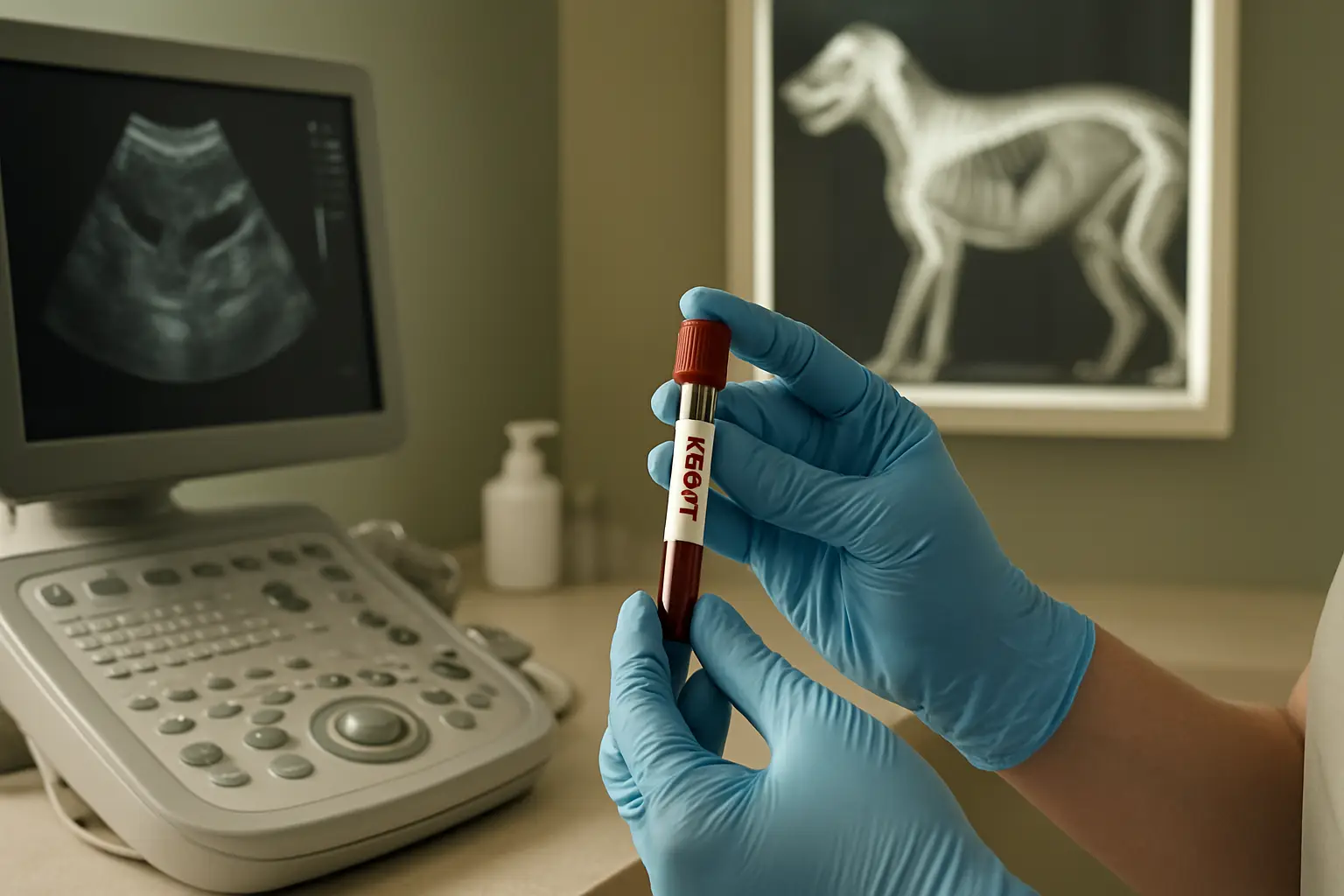
Does Pet Insurance Cover Ultrasound, MRI and CT Scans?
Advanced imaging may be covered when it is medically necessary to diagnose an eligible condition. Ultrasound is commonly used to examine organs, soft tissue, the abdomen and the heart.
MRI scans are often recommended for neurological, spinal, joint and soft-tissue problems. CT scans may be used to assess trauma, internal structures, tumors or areas that require detailed three-dimensional imaging.
The scan may not be the only charge on the invoice. Advanced testing can also involve:
- A specialist consultation
- Sedation or general anesthesia
- Pre-anesthetic bloodwork
- Radiology interpretation
- Hospital monitoring
- Follow-up imaging
Ask the insurer whether each related service is eligible. A policy may cover the scan while treating the examination fee, specialist fee or sedation differently.
Why Could a Diagnostic Test Claim Be Denied?
A veterinarian can consider a test medically necessary while the insurer still decides that the expense is not eligible. Medical necessity and insurance coverage are separate decisions.
Earlier symptoms, treatment or veterinary advice may cause the underlying condition to be treated as pre-existing, even when a formal diagnosis came later.
Routine screening for a healthy pet may fall outside standard accident and illness coverage.
Symptoms that begin during a waiting period may affect related testing and treatment claims.
Testing connected to an excluded condition, procedure or circumstance may also be excluded.
An accident-only policy may cover imaging after an injury but not testing used to diagnose an illness.
Eligible testing can still exceed an annual, lifetime or condition-specific benefit limit.
Previous symptoms can matter even when your pet did not have a confirmed diagnosis at the time. Review how insurers evaluate pet insurance and pre-existing conditions before assuming a future test will qualify.
How Much Will Pet Insurance Pay?
Coverage approval does not necessarily mean the insurer will pay the entire diagnostic bill. The final amount can depend on:
- The eligible portion of the invoice
- Your remaining deductible
- Your reimbursement percentage
- Your remaining annual limit
- Any excluded examination or specialist fees
Suppose a diagnostic visit costs $1,200, but $150 of the bill is not eligible. If the pet owner still has a $250 deductible and an 80% reimbursement rate, the estimated payment would be based on the eligible amount remaining after the deductible.
Policy calculations vary, so review how pet insurance deductibles work before comparing estimated payouts.
Reimbursement Example
| Total veterinary bill | $1,200 |
| Ineligible charges | $150 |
| Eligible diagnostic cost | $1,050 |
| Remaining deductible | $250 |
| Amount after deductible | $800 |
| Reimbursement at 80% | $640 |
This simplified example is for education only. Providers may apply deductibles and eligible charges differently. Read the full guide to pet insurance reimbursement for a broader explanation.
What Should You Ask Before Approving an Expensive Test?
MRI scans, CT scans and specialist imaging can produce several separate charges. Contact the provider before treatment when possible, especially if the procedure is expensive.
Ask whether the insurer can review the suspected condition and proposed test before treatment.
Some plans include the consultation fee while others cover only eligible diagnostics and treatment.
Confirm coverage for radiologists, neurologists, internal-medicine specialists and emergency clinicians.
Ask how the policy treats anesthesia, monitoring and pre-anesthetic laboratory work.
The remaining deductible can have a major effect on the amount reimbursed.
Insurers may request medical records, clinical notes, test results and an itemized invoice.
How to File a Diagnostic-Test Claim
Ask the clinic for a detailed invoice that separates examination fees, laboratory work, imaging, sedation, interpretation, medication and treatment.
A typical claim may require:
- An itemized veterinary invoice
- The veterinarian's clinical notes
- The medical reason for the test
- Diagnostic findings or test results
- Your pet's relevant medical history
- A completed claim form, when required
Follow the complete pet insurance claims process to understand what documents may be needed and how insurers review expenses.

How to Compare Diagnostic-Test Coverage
Do not compare policies using the word “diagnostics” alone. Review which tests, fees and medical situations are actually included.
- Bloodwork, X-rays, ultrasound, MRI and CT coverage
- Veterinary examination fees
- Specialist and radiologist fees
- Sedation and anesthesia
- Hereditary and congenital conditions
- Waiting periods
- Annual and condition-specific limits
- Preauthorization options
Comparing these details can help you identify a policy that provides meaningful protection when your pet needs more than a routine examination.
Compare Pet Insurance QuotesThe Bottom Line
Pet insurance can often cover diagnostic tests when they are medically necessary for an eligible accident or illness. Bloodwork, X-rays, ultrasounds, MRI scans, CT scans, biopsies and pathology may qualify, depending on the policy and your pet's medical history.
The reason for the test matters more than the test name. Routine screening, preventive care, pre-existing symptoms, waiting periods and excluded conditions can change the result.
Before buying a policy, compare how each provider handles diagnostic imaging, laboratory work, examination fees, specialists, sedation, deductibles and annual limits.
Frequently Asked Questions
Does pet insurance cover diagnostic tests?
It can cover diagnostic tests when they are ordered for an eligible accident or illness. Routine testing and tests related to pre-existing or excluded conditions may not qualify.
Does pet insurance cover routine bloodwork?
Routine bloodwork for a healthy pet may be treated as preventive care and may require a wellness benefit. Illness-related bloodwork may be covered under an accident and illness policy.
Does pet insurance cover an MRI for a dog?
An MRI may qualify when a veterinarian orders it to diagnose an eligible neurological, spinal, joint or soft-tissue condition.
Does pet insurance cover ultrasounds for cats?
An ultrasound may be covered when it is medically necessary to investigate a covered illness. Pregnancy monitoring and preventive screening may be excluded.
Does pet insurance cover CT scans?
Many accident and illness policies can cover CT scans for eligible medical conditions, but related anesthesia, specialist and interpretation fees should be confirmed separately.
Can a test be denied when a veterinarian recommends it?
Yes. A test can be medically necessary but ineligible under the policy because of a waiting period, pre-existing condition, exclusion, deductible or benefit limit.
Editorial note: This article provides general educational information. Coverage varies by insurer, plan, state, medical history and policy terms. Review the policy documents and contact the insurer for a decision about a specific test or claim.